
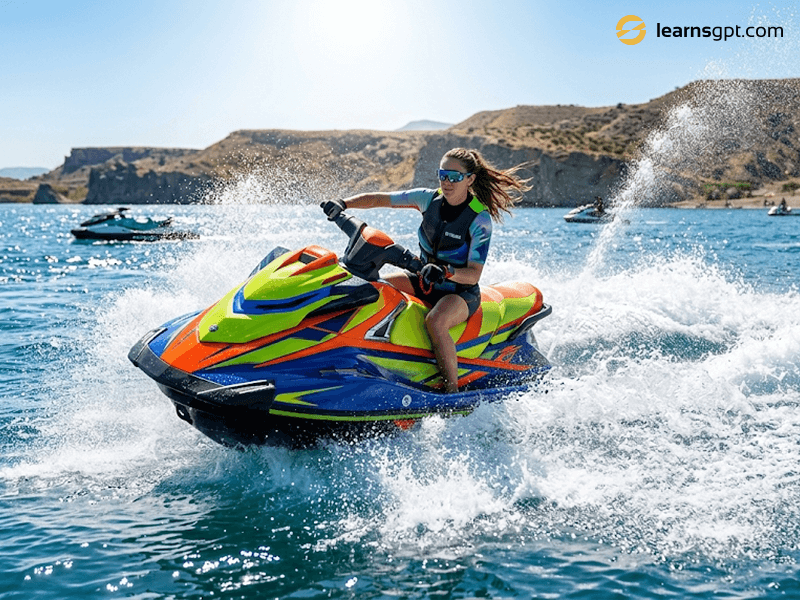
If you are planning a summer vacation or looking to buy your first watercraft, you might be asking the fundamental question: exactly what is a jet ski?
While most people use the term to describe any small, fast vehicle you ride on the water, the truth is actually a bit more complicated. These machines are engineering marvels that revolutionized ocean and lake recreation, providing the thrill of a motorcycle but on the open water.
In this comprehensive marine guide, we will answer the question of what is a jet ski, explore the fascinating physics of how they propel themselves without an exposed propeller, and share crucial safety tips for your next ride.
The True Definition and Brand History
To truly answer what is a jet ski, we have to look at brand trademarks. Technically, the correct engineering term for these vehicles is a “Personal Watercraft” (PWC).
The term “Jet Ski” is actually a registered trademark owned by the Japanese company Kawasaki. They introduced the first commercially successful stand-up model in 1973. Because it became so incredibly popular, the brand name became synonymous with the product itself (similar to how people call all facial tissues “Kleenex”). Today, Yamaha calls their version a “WaveRunner,” and Sea-Doo makes their own distinct PWC models.
For official definitions, safety regulations, and legal requirements regarding personal watercrafts, you can always refer to the United States Coast Guard Boating Safety Division.
5 Mechanics: What is a Jet Ski Made Of?
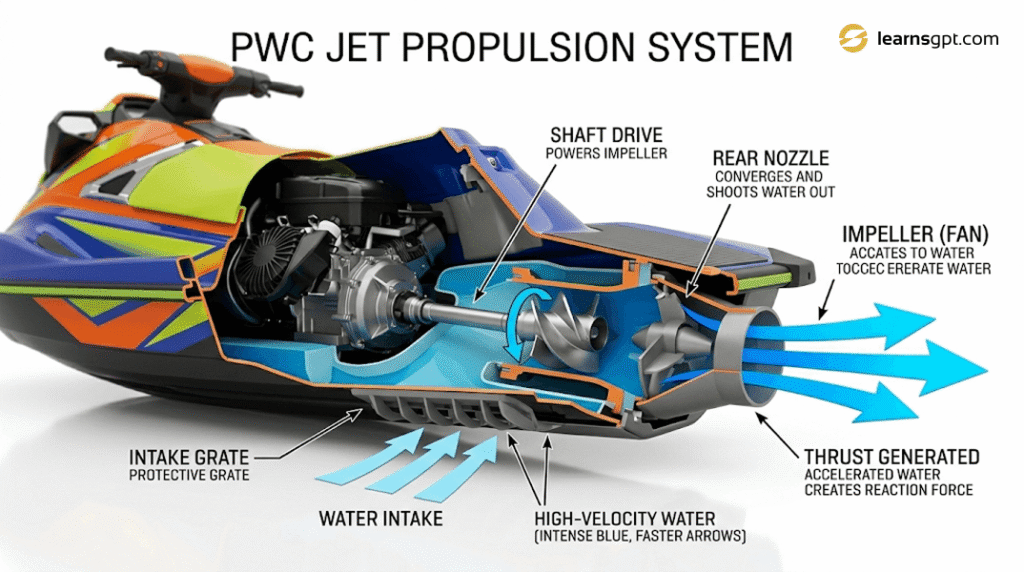
Mechanically speaking, what is a jet ski and how does it move so incredibly fast without a traditional outboard motor? Here are the 5 core components.
1. The Internal Impeller
Unlike a standard boat, a PWC does not have an exposed propeller blade that can hurt swimmers. Instead, it uses an internal fan called an impeller. This fan is hidden deep inside a pipe inside the hull.
2. The Water Intake Grate
Located on the very bottom of the hull, the intake grate sucks massive amounts of lake or ocean water up into the internal pipe as the engine spins the impeller.
3. The Steering Nozzle
Once the water is sucked in, the impeller forces it out through a much smaller nozzle at the back of the craft. This creates a massive, high-pressure jet of water. When you turn the handlebars, it changes the direction of this rear nozzle, which steers the vehicle.
4. The Safety Lanyard (Kill Switch)
Every PWC is equipped with a safety cord that attaches to the rider’s life jacket. If the rider falls off, the cord pulls a switch that instantly kills the engine, preventing the craft from driving away on its own.
5. The Hull Design
A PWC has a V-shaped fiberglass or composite hull designed to slice through choppy waves and provide stability, whether you are sitting down or standing up.
Comparing Different Types of Watercraft
When deciding how you want to spend your summer, you might wonder how a PWC compares to larger vessels.
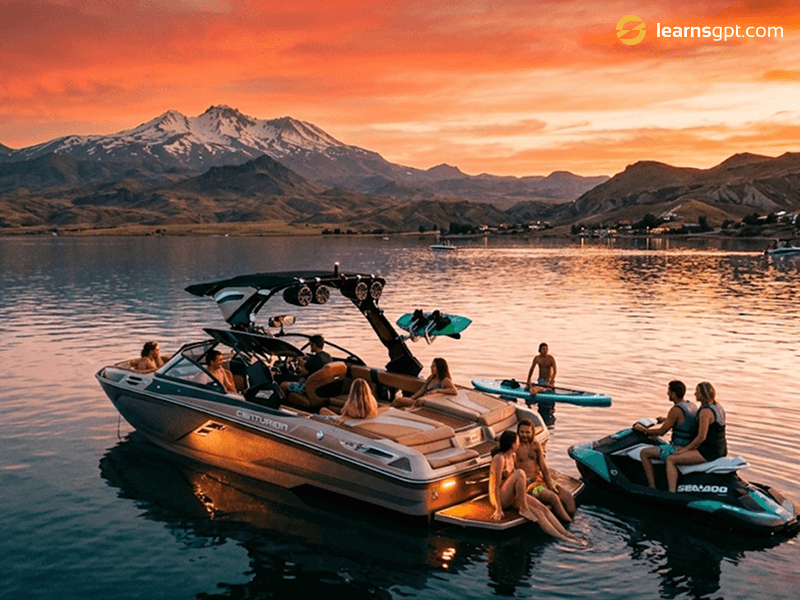
If you want to surf or wakeboard, a PWC is not the best choice. Instead, you should read our engineering guide on how is a ski boat designed for making waves. A ski boat uses heavy internal water ballasts to sink the boat and create massive surfable waves, whereas a PWC is designed to be as light and fast as possible, leaving only a very small wake behind it.
The Physical Demands of Riding: Protect Your Legs
Riding a PWC is an extreme sport. If you are standing up and jumping over ocean waves, your legs act as your primary shock absorbers.
Interestingly, the muscle fatigue you experience on the water is almost identical to snow sports. Many people wonder how long do skis last on the mountain before they stop absorbing shock. When your gear (or your watercraft) hits hard bumps, your calf muscles take the impact.
If you grip the PWC too tightly with your legs or stand for hours, you will inevitably ask yourself why do my calves hurt after skiing. Just like on the snowy slopes, constant tension on the water means tight calves cause shin splints. Always stretch your lower legs before a long day of riding the waves!
Frequently Asked Questions (FAQs)
Exactly what is a jet ski classified as?
Legally and mechanically, it is classified by the Coast Guard as a Class A inboard vessel, more commonly referred to as a Personal Watercraft (PWC).
Do jet skis have brakes?
Older models do not have brakes; you simply let off the throttle and water friction slows you down. However, many modern models feature electronic braking systems that drop a reverse gate into the water jet to rapidly decelerate the craft.
Is it hard to drive a personal watercraft?
No, they are relatively easy to learn. There are no gears to shift. You simply squeeze the throttle on the handlebar to go faster. However, you must remember that you cannot steer unless you are applying the throttle!
What is the difference between a Jet Ski and a WaveRunner?
The only difference is the brand name. “Jet Ski” is the trademarked name for Kawasaki’s personal watercraft, while “WaveRunner” is the trademarked name for Yamaha’s personal watercraft.
Do you need a license to drive one?
In most states and countries, yes. Depending on your age and local laws, you generally need to complete a certified boater safety course and obtain a boating license to legally operate a PWC on public waters.