
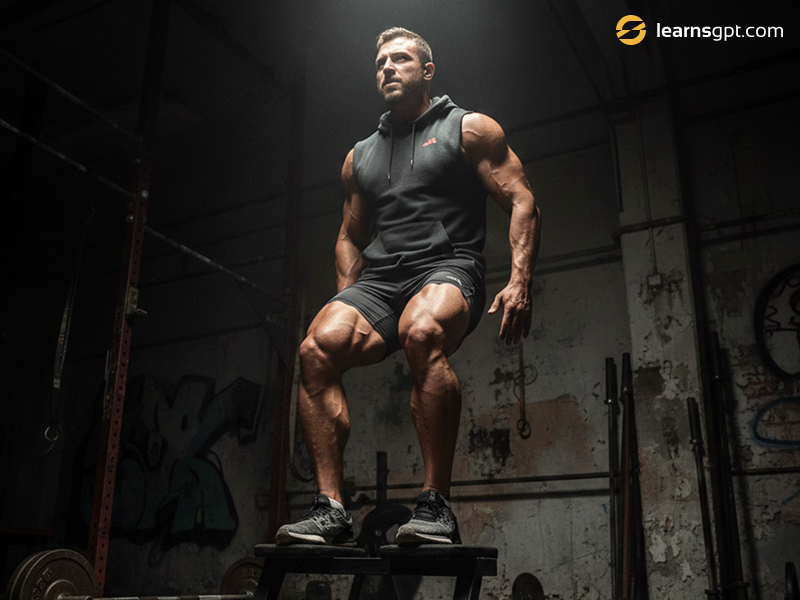
If you spend hours in the gym but still struggle with skinny lower legs, you are probably constantly asking yourself: how to make your calves bigger? You are not alone. The calf muscles are notoriously stubborn, and many people falsely believe that if you don’t have good genetics, you can never grow them.
While genetics do play a role in muscle insertion points, anyone can add serious mass to their lower legs with the right training protocol. Training calves requires a specific approach that differs from how you train your chest or biceps.
In this ultimate guide, we will break down the exact science and provide 7 actionable tips on how to make your calves bigger, stronger, and more defined.
Understanding Calf Muscle Anatomy
Before we look at how to make your calves bigger, we need to understand the anatomy of the lower leg. The calf is primarily made up of two distinct muscles:
- The Gastrocnemius: This is the large, diamond-shaped muscle that is visible from the outside. It is activated the most when your legs are straight (e.g., standing calf raises).
- The Soleus: This is a flatter, wider muscle that lies underneath the gastrocnemius. It is activated the most when your knees are bent (e.g., seated calf raises).
To maximize growth, you absolutely must train both of these muscles effectively. For more scientific details on muscle activation, you can read the American Council on Exercise (ACE) Guide to Calf Training.
7 Proven Tips: How to Make Your Calves Bigger
If you are ready to stop hiding your legs in sweatpants, follow these 7 essential training rules to force your stubborn muscles to grow.
Prioritize Them at the Beginning of Your Workout
Most people train calves at the very end of their leg day when they are completely exhausted. If you truly want to know how to make your calves bigger, you must train them first. Hit them while your energy levels and central nervous system are fresh.
2. Use a Full Range of Motion
Bouncing the weight up and down quickly does nothing for muscle growth. You must drop your heels as low as possible to get a deep stretch, and then push up as high as you can onto your toes. Squeeze the muscle hard at the top for one full second.
3. Pause at the Bottom
Your Achilles tendon acts like a thick rubber band. If you bounce out of the bottom of a calf raise, your tendon does all the work, not your muscle. Pause for two seconds at the bottom of every single rep to eliminate this bounce.
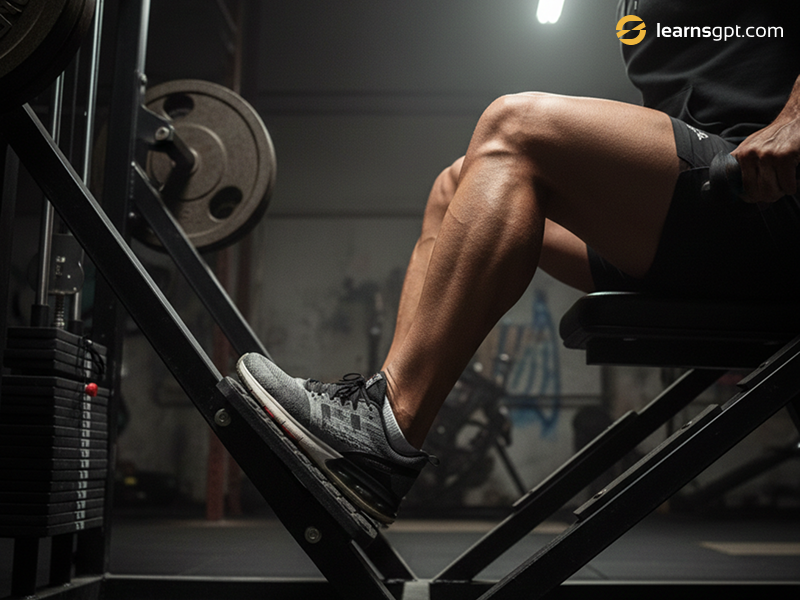
4. Train Both Seated and Standing
As mentioned in the anatomy section, standing calf raises build the gastrocnemius, while seated calf raises build the soleus. A complete routine must include both variations to maximize overall volume and width.
5. Increase Your Training Frequency
Calves are built for endurance. They carry you around all day, which means they recover very quickly. Training them once a week is not enough. To discover the secret of how to make your calves bigger, try training them 3 to 4 times a week with intense, heavy sets.
6. Apply Progressive Overload
Just like your chest or back, your calves need heavier weights to grow. Stop doing endless sets of 50 reps with light weight. Start loading the machine with heavy weights and aim for a challenging 10 to 15 reps.
7. Try Walking on an Incline
Bodybuilders often use the treadmill for extra calf development. Walking on a steep incline forces your calves to work constantly under tension. This is also why many winter athletes experience massive calf pumps; just read our guide on why do my calves hurt after skiing to understand the impact of constant leg tension!
Tracking Your Muscle Growth
You cannot manage what you do not measure. If you are putting in the hard work to figure out how to make your calves bigger, you need to track your progress accurately.
Taking photos is great, but using a measuring tape is better. To ensure you are getting an accurate reading every single month, make sure you follow our step-by-step tutorial on how to measure calves correctly.
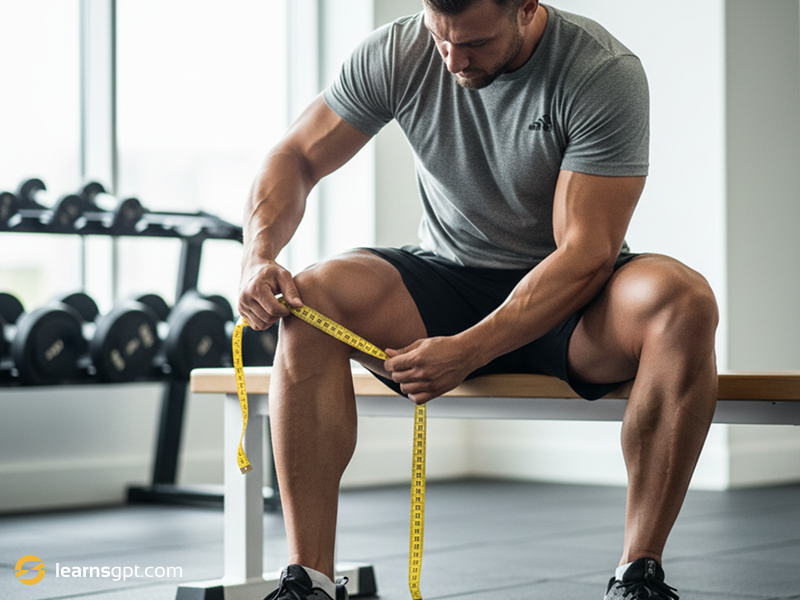
Tracking your muscle growth to see how to make your calves bigger.Don’t Forget About Recovery and Flexibility
Building big muscles is great, but building healthy, functional muscles is even better. As your calves get larger and stronger, they can also become very tight.
If you ignore flexibility, the tension from your massive new calves will pull on your shin bone. In fact, many runners and bodybuilders suffer from lower leg pain simply because tight calves cause shin splints. Always foam roll and stretch after your intense calf workouts.
Frequently Asked Questions (FAQs)
Is it genetically impossible to grow calves?
No, it is not impossible. While genetics dictate the shape and insertion points of your muscles (high vs. low calves), progressive overload and proper nutrition will force any muscle to grow larger over time.
How many times a week should I train my calves?
Because calf muscles recover very quickly, you should train them 3 to 4 times a week for optimal growth. Treat them like your abdominal muscles and train them frequently.
Are high reps or low reps better for calves?
A mix of both is ideal. Heavy weights with lower reps (8-12) build the fast-twitch muscle fibers, while higher reps (15-25) with moderate weight target the slow-twitch fibers. Doing both will maximize total growth.
Why do my calves cramp when I train them?
Cramping usually occurs due to dehydration, a lack of electrolytes (like potassium and magnesium), or pushing the muscle far beyond its usual capacity without a proper warm-up. Drink plenty of water before leg day.
Can running or cycling make my calves bigger?
Running and cycling are great for endurance and toning, but they are not optimal for adding pure muscle mass. To significantly increase the size of your calves, you must lift heavy weights using focused resistance exercises.