
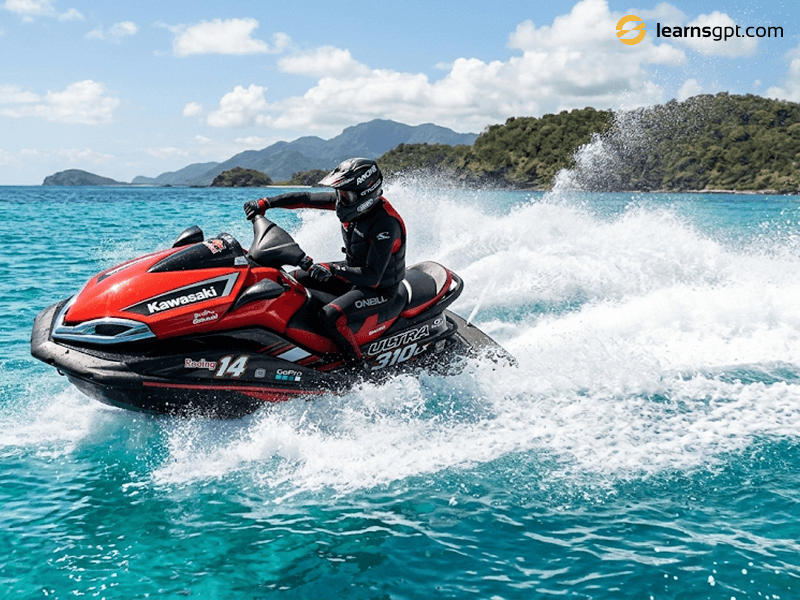
If you are planning to hit the water this summer and experience the thrill of personal watercraft, you are probably asking yourself: how fast will a jet ski go? Whether you are a complete beginner looking for a relaxing ride or a seasoned adrenaline junkie chasing top speeds, understanding the capabilities of your machine is essential before you twist that throttle.
In this comprehensive guide, we will break down the average speeds of different models, the factors that affect your top speed, and crucial safety tips for high-speed riding. Before we dive into the exact numbers, if you are completely new to this water sport, you might want to read our fundamental guide on what is a jet ski to get familiar with the basics.
Average Speeds: How Fast Will a Jet Ski Go?
The short answer to “how fast will a jet ski go” is that it entirely depends on the make, model, and engine size. On average, a standard recreational jet ski can reach speeds between 40 mph and 60 mph (64 to 96 km/h). However, the market is divided into several categories, each designed for different types of riders.
Beginner and Recreational Models
If you are renting a jet ski on vacation or buying your first entry-level model, you can expect a top speed of around 40 to 50 mph. These models are built with stability, fuel efficiency, and safety in mind rather than raw power. They usually feature engines ranging from 60 to 100 horsepower.
Performance and Professional Models
For those who crave extreme speed, performance models are the way to go. So, under maximum power, how fast will a jet ski go? High-performance and luxury models, often equipped with supercharged engines producing upwards of 300 horsepower, can easily reach speeds of 65 to 70 mph straight out of the factory.
Factors That Affect How Fast a Jet Ski Will Go
Even if you purchase the fastest machine available, several external and internal factors will dictate your actual top speed on the water.
Water Conditions and Wind
The environment plays a massive role. Choppy water, strong currents, and high winds create drag and instability, significantly reducing your top speed. To achieve maximum velocity, you need perfectly flat, “glassy” water conditions and minimal wind resistance.
Rider Weight and Fuel Load
Weight is the enemy of speed. The total weight of the rider, any passengers, and the amount of fuel in the tank will directly impact how fast will a jet ski go. A lighter solo rider with a half-empty tank will always achieve a higher top speed than two heavy adults riding on a full tank of gas.
The Fastest Jet Skis on the Market Today
Manufacturers have a gentlemans agreement with the United States Coast Guard to electronically limit factory jet skis to 67 mph (often flashing up to 68-70 mph on the speedometer). If you want to see the pinnacle of engineering, you should look at top-tier brands.
Models like the Sea-Doo RXP-X 325 and the Yamaha FX SVHO are absolute rockets on the water. These machines utilize advanced hull designs and massive superchargers. To learn more about the engineering behind top-tier marine engines, you can explore the official Yamaha WaveRunners website.
Safety Tips for High-Speed Riding
Now that you know how fast will a jet ski go, it is vital to respect that power. Hitting the water at 70 mph is equivalent to hitting concrete if you fall off improperly.
- Always wear a USCG-approved life jacket: This is non-negotiable, regardless of your swimming ability.
- Use the safety lanyard: Always attach the engine shut-off cord to your life jacket or wrist. If you fall off, the engine will instantly die.
- Maintain a safe distance: High speeds mean longer braking distances. Keep a wide berth from boats, swimmers, and docks.
- Wear protective gear: Consider goggles to protect your eyes from water spray and wind, and neoprene shorts to protect against high-impact falls.
Frequently Asked Questions
What is the average speed of a jet ski?
The average recreational jet ski has a top speed of around 40 to 55 mph. Entry-level models hover around 40 mph, while luxury and performance models can reach between 65 and 70 mph.
How fast will a jet ski go with two people?
Adding a second person increases the total weight, which creates more drag. Depending on the combined weight and the engine size, having two people on board can reduce the top speed by 5 to 10 mph.
Are there speed limits for jet skis?
Yes. While the ocean might seem open, many lakes, rivers, and coastal areas have strict speed limits, often dictated by “no wake” zones. Additionally, manufacturers electronically limit factory jet skis to 67 mph in the US due to Coast Guard regulations.
Can I modify my jet ski to go faster?
Yes, aftermarket modifications such as replacing the impeller, upgrading the exhaust system, tuning the ECU, or changing the air intake can bypass factory speed limiters and push top speeds well over 80 mph. However, this voids the warranty and increases engine wear.
Do jet skis have brakes?
Modern jet skis do not have traditional brakes like a car. Instead, brands like Sea-Doo (IBR system) and Yamaha (RiDE system) use a reverse thrust bucket that drops down to rapidly decelerate the watercraft, acting as an electronic braking system.