
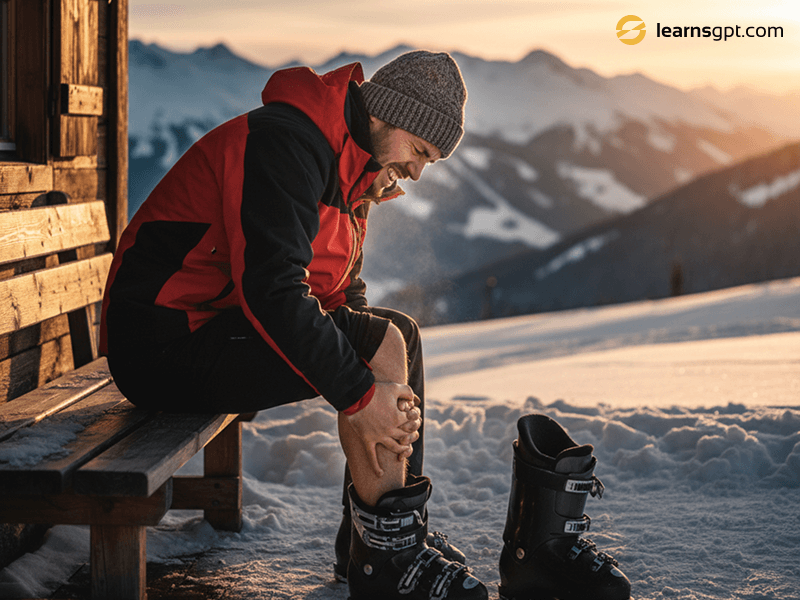
If you have just returned from a beautiful day on the snowy mountains, you might be asking yourself, “why do my calves hurt after skiing?” It is one of the most common complaints among both beginner and advanced skiers.
Skiing is a highly demanding sport that forces your lower body to work in ways it usually doesn’t during everyday life. The constant balancing, turning, and shock absorption place immense stress on your lower legs.
In this comprehensive guide, we will explore exactly why do my calves hurt after skiing, how your ski boots play a major role in this pain, and what you can do to prevent it on your next winter trip.
The Biomechanics of Skiing and Your Lower Legs
To understand why do my calves hurt after skiing, we must first look at how the sport works. When you ski, your ankles are locked into rigid plastic boots. Because your ankles cannot bend freely, your knees and your calf muscles (the gastrocnemius and soleus) have to do all the heavy lifting to keep you balanced.
Every time you hit a bump or make a sharp turn, your calves contract rapidly to stabilize your entire body weight against the forces of gravity and speed.
For an in-depth look at winter sports injuries and prevention, check out the American Physical Therapy Association’s guide on Skiing.
5 Reasons: Why Do My Calves Hurt After Skiing?
If you are lying in bed trying to figure out the exact cause of your pain, here are the top 5 culprits.
1. Poorly Fitting Ski Boots
This is the number one reason. If your ski boots are too loose, your calf muscles have to constantly clench to keep your foot stable inside the boot. On the other hand, if they are too tight at the top, they cut off circulation. Knowing your exact leg size is vital. Before your next trip, use our easy 7-step guide to learn exactly how to measure calves properly so you can rent or buy the perfect boot size.
2. “Backseat” Skiing Posture
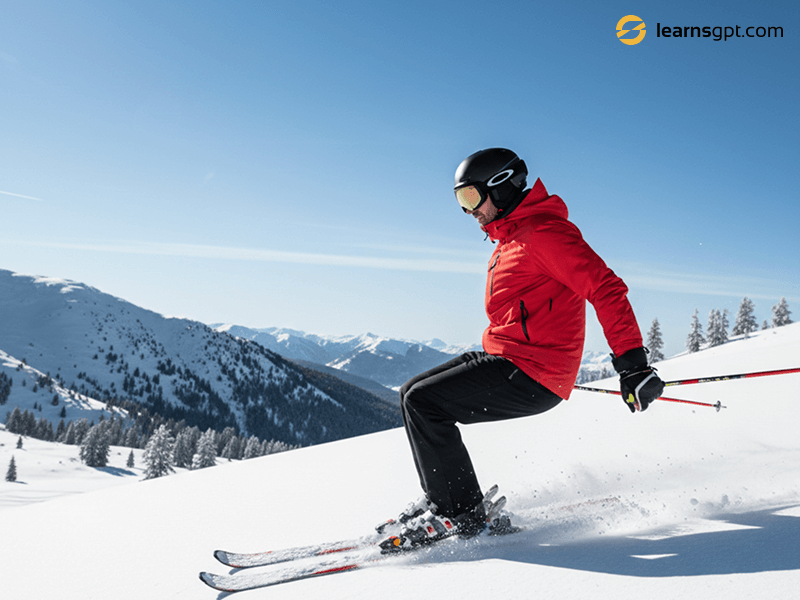
Are you leaning back? Many skiers, especially beginners, get scared of the speed and lean backward. This is called “backseat skiing.” When you lean back, the front of your skis lifts slightly, and your calf muscles are forced to engage at maximum capacity to keep you from falling backward. This constant tension is a major reason why do my calves hurt after skiing.
3. Muscle Micro-Tears and Lactic Acid
Skiing requires eccentric muscle contractions (the muscle lengthening under tension). This creates tiny micro-tears in the muscle fibers. While this is a normal part of building strength, it causes delayed onset muscle soreness (DOMS). Furthermore, if your calves are naturally tight, the trauma is worse. In fact, tight lower leg muscles don’t just hurt after skiing; tight calves cause shin splints during running as well.
4. Cold Weather Constriction
Cold temperatures cause blood vessels to constrict. Less blood flow means less oxygen reaching your hardworking calf muscles. This leads to premature fatigue, cramping, and that burning sensation you feel on the ski lift.
5. Lack of Pre-Season Conditioning
You cannot go from sitting at a desk for 11 months straight to skiing 6 hours a day without consequences. If your legs are not conditioned for the sport, your calves will inevitably scream in pain.
How to Treat Skiing Calf Pain Fast
Now that you know why do my calves hurt after skiing, what can you do about it right now?
- Active Recovery: Do not just sit still. Take a light 15-minute walk to promote blood flow to the lower legs.
- Heat Therapy: Soak in a hot tub or take a warm bath. Heat relaxes the stiff muscle fibers.
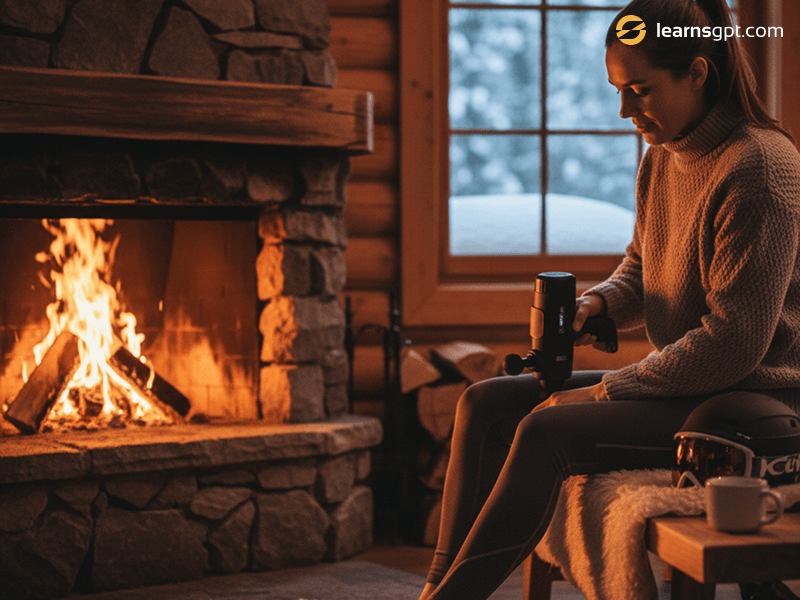
- Massage and Stretching: Gently stretch your calves against a wall. Use a foam roller or a massage gun to break up the lactic acid build-up.
- Hydration: Drink plenty of water. Dehydration makes muscle cramps significantly worse.
A Quick Note on “Calves” (The Animal Kind!)
Since we are talking so much about calves (the muscles), we have to make a quick joke! If you landed on this page because you are a farmer wondering why your baby cows (calves) are acting up after playing in the snow, you are in the wrong place! However, if you are actually looking for farm advice, be sure to read our guide on the best milk replacer for calves.
Frequently Asked Questions (FAQs)
Is it normal for my calves to burn while skiing?
Yes, a mild burning sensation is normal due to lactic acid build-up from the intense workout. However, sharp, stabbing pain is not normal and may indicate a poorly fitted boot or a muscle strain.
How should my ski boots fit to prevent calf pain?
Your ski boots should feel like a firm handshake. They should be snug enough that your heel does not lift when you bend your knees, but not so tight that they cut off circulation to your toes or calves.
Will custom insoles help with calf pain from skiing?
Absolutely. Custom footbeds (insoles) align your foot properly inside the boot. This prevents your foot from overpronating, which in turn takes a massive amount of stress off your calf muscles and shins.
How long will my calves hurt after a ski trip?
If the pain is standard delayed onset muscle soreness (DOMS), it should peak around 48 hours after skiing and completely resolve within 3 to 5 days with proper rest and hydration.
What exercises should I do before ski season to prevent calf pain?
To prepare your legs, focus on calf raises, squats, lunges, and jump roping. Building lower body strength and endurance 6 to 8 weeks before your trip is the best way to prevent the dreaded post-skiing calf ache.