
Learning how to measure calves is an essential skill that saves you time, money, and frustration. Whether you are shopping for a new pair of knee-high boots, buying medical compression socks, or tracking your fitness progress, getting an accurate calf measurement is crucial.
Many people simply guess their leg size, which leads to returning ill-fitting shoes or wearing uncomfortable garments. In this comprehensive guide, we will show you exactly how to measure calves perfectly every single time.
Why Accurate Calf Measurements Matter
Your calf muscle (composed of the gastrocnemius and soleus muscles) can fluctuate in size depending on the time of day, your activity level, and your hydration. Knowing how to measure calves properly ensures that the apparel you buy will not cut off your circulation or constantly slip down your leg.
For instance, wearing correctly sized compression garments is vital for blood flow. You can read more about the medical benefits of proper compression wear on the WebMD guide to compression stockings.
What You Will Need to Measure Your Calves
Before we dive into how to measure calves, gather these simple tools:
- A soft, flexible measuring tape (like a tailor’s tape).
- A chair to sit on.
- A piece of paper and a pen to write down your numbers.
Pro Tip: If you do not have a flexible measuring tape, you can use a piece of non-stretchy string. Wrap the string around your leg, mark the spot, and then lay it flat against a standard metal ruler.
7 Steps: How to Measure Calves Correctly
Follow these simple instructions to get the most accurate number possible.
Step 1: Choose the Right Time of Day
Our legs tend to swell as the day goes on. If you are measuring for boots, it is best to measure in the afternoon or evening.
Step 2: Wear the Right Clothing
Measure your bare skin or wear the exact socks/tights you plan to wear with your boots or garments.
Step 3: Sit Down Comfortably
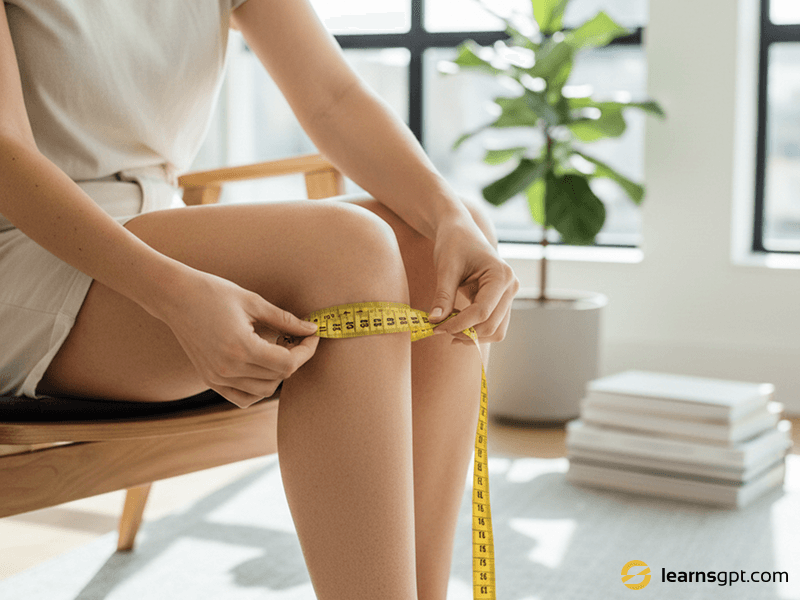
Sit on a chair with your feet flat on the floor. Your knees should be bent at a perfect 90-degree angle.
Step 4: Find the Widest Part
Feel around your lower leg to locate the thickest, widest part of your calf muscle. This is the spot you need to measure.
Step 5: Wrap the Tape Measure
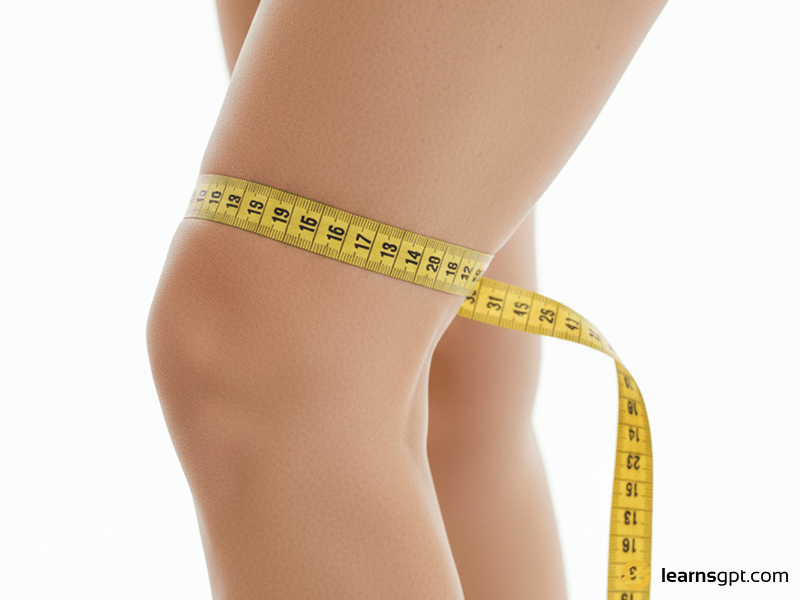
Take your soft measuring tape and wrap it around that widest point. Ensure the tape is snug but not digging into your skin. It should be perfectly horizontal, not slanted.
Step 6: Record the Number
Look at the intersection on the tape and write down the measurement in both inches and centimeters, as different brands use different sizing charts.
Step 7: Measure Both Legs
This is the golden rule of how to measure calves: always measure both legs! Most people have one calf that is slightly larger than the other. Always use the larger measurement when shopping.
How to Measure Calves for Boots vs. Compression Socks
While the basic technique remains the same, the application differs slightly depending on what you are buying.
For Boots: Always add about 0.5 to 1 inch (1.25 to 2.5 cm) to your final measurement. This extra breathing room ensures you can tuck in your jeans or wear thick winter socks comfortably. If you also need to measure other body parts for a full wardrobe update, check out our ultimate guide to body measurements.
For Compression Socks: Do not add any extra inches. Compression socks need to be skin-tight to function properly. Use your exact measurement. Furthermore, you will usually need to measure the narrowest part of your ankle as well.
Frequently Asked Questions (FAQs)
How do I know if I have wide calves?
Generally, in the fashion and footwear industry, a calf circumference of 16 inches (approx. 40.5 cm) or more is considered a “wide calf.” Many brands specifically design “wide-calf boots” for these measurements.
Is it better to measure calves standing or sitting?
It is highly recommended to sit with your feet flat on the floor and your knees at a 90-degree angle. Standing can flex the muscle differently and give you an inconsistent measurement.
What if I don’t have a flexible measuring tape?
As mentioned earlier, you can learn how to measure calves using a simple piece of string or a phone charging cable. Wrap it around the widest part of your calf, pinch the spot where it meets, and then measure that length against a stiff ruler.
Why is one of my calves bigger than the other?
It is completely normal! Most people have a dominant side. If you play sports, drive a manual car, or simply favor one leg when standing, that muscle will naturally grow slightly larger.
How often should I measure my calves?
If you are actively losing weight or building muscle at the gym, checking your measurements once a month is sufficient. If you are simply buying clothes, measure them right before you make a purchase to ensure the most up-to-date sizing.